

Dental science has turned full-arch rehabilitation into a single-day procedure, thanks to the All-on-4 concept. Yet if you start Googling “best All on 4 dental implants,” you will quickly realize that not every titanium screw is created equal. The longevity of your new smile depends on a trio of factors, implant material, prosthetic framework, and the brand-specific engineering that ties everything together. In this guide, we break down the science behind modern implant materials, compare leading manufacturers, and give you a clear roadmap for choosing the safest, most durable system for your mouth and budget.
1. All-on-4 in a Nutshell: Why Materials Matter
All-on-4 replaces a full upper or lower arch with just four strategically angled implants that support a fixed bridge. Because the implants are placed toward the front of the jaw, where bone density is naturally higher, most patients can skip bone grafting and leave surgery with an immediate provisional bridge. However, the reduced number of implants means each fixture must withstand higher bite forces and resist corrosion for decades. That is where material science—and brand-level precision—make or break the case.
2. Core Implant Materials Explained
| Material | Primary Composition | Strength (MPa)* | Corrosion Resistance | Biocompatibility | Typical Use in All-on-4 |
|---|---|---|---|---|---|
| Grade 4 Titanium | ≥99% Ti | ~550 | Excellent | Excellent | Conventional implant fixtures |
| Ti-Zirconium Alloy (Roxolid®) | ~85% Ti, 15% Zr | ~930 | Excellent | Excellent | Narrow-diameter implants, high-load sites |
| Zirconia (Y-TZP) | Zirconium dioxide | ~1200** | Very high | Excellent | Ceramic one-piece implants, metal-free cases |
| PEEK + Carbon Fiber | Poly-ether-ether-ketone | ~150 | Good | Good | Substructure for provisional bridges |
*Ultimate tensile strength. **Flexural strength.
Key insights:
- Pure titanium remains the gold standard because it forms a passive oxide layer that resists oral acids.
- Ti-Zr alloys leverage zirconium’s grain-refining effect, boosting strength by roughly 70 percent compared with Grade 4 titanium. This allows for thinner diameters—crucial when bone width is limited.
- Zirconia is the only mainstream “white” implant material, favored by patients seeking a metal-free solution. New surface treatments (e.g., laser micro-texturing) now enable osseointegration on par with titanium.
3. Framework Options: What Actually Holds the Teeth?
The four implants are only half the story. The superstructure that links them must disperse chewing loads evenly while remaining lightweight. The three frameworks most often used are:
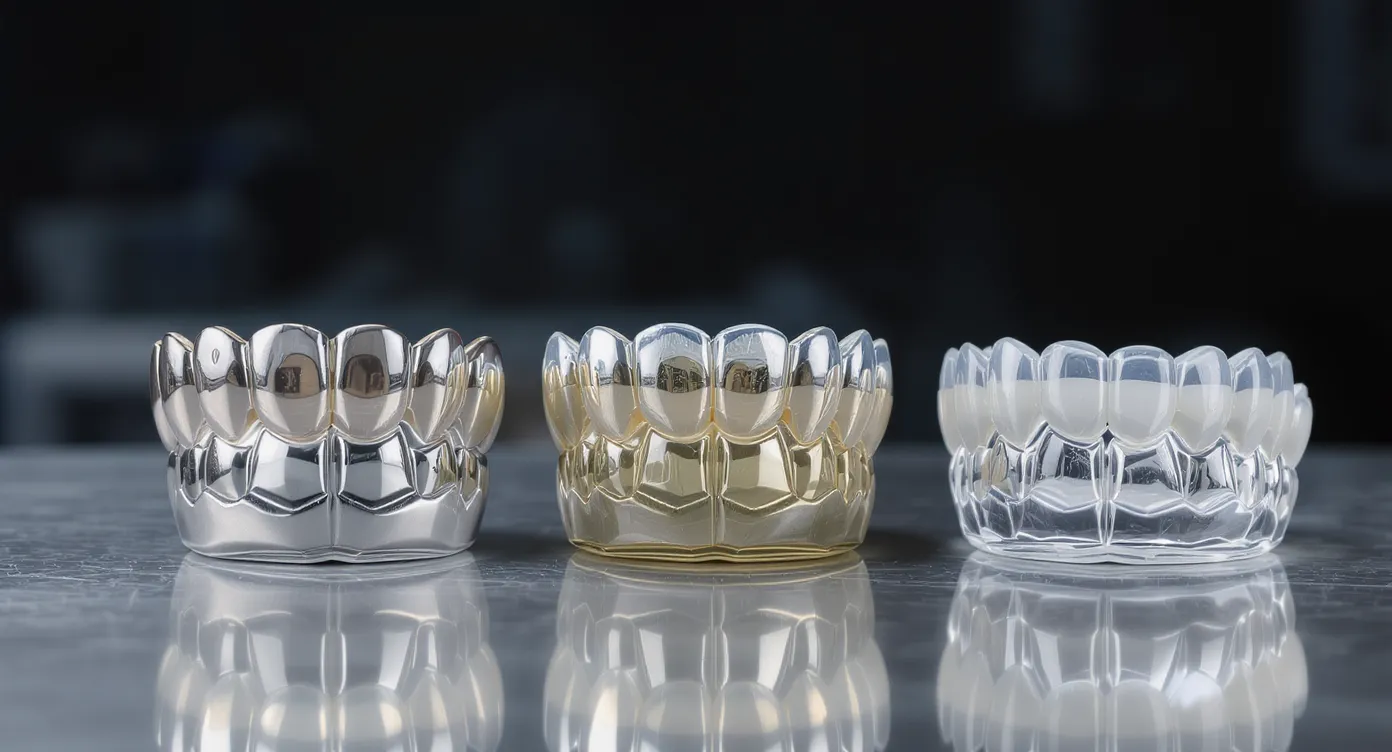
- CAD/CAM Milled Titanium – Nearly indestructible, ideal for bruxers (heavy grinders). But it is heavier and slightly darker under thin gum biotypes.
- Chrome-Cobalt (Cr-Co) – Cost-effective with excellent rigidity. Higher nickel and molybdenum content can be a concern for metal-sensitive patients.
- Zirconia Monolith – A single milled block offers unmatched esthetics and eliminates metal allergies. Requires exact chairside records; repairs can be difficult if a chip occurs.
4. Leading All-on-4 Brands and Their Unique Technologies
Below is an evidence-based snapshot of the manufacturers most commonly selected for full-arch cases. Data are drawn from peer-reviewed studies and the companies’ own regulatory filings.
| Brand | Flagship All-on-4 Platform | Signature Material / Tech | 5-Year Cumulative Survival* | Notable Advantages |
|---|---|---|---|---|
| Nobel Biocare | NobelActive & NobelParallel | Grade 4 Ti + TiUnite® anodized surface | 95–98% | Original All-on-4 protocol, extensive long-term data, globally available components |
| Straumann | BLX & TLX (Roxolid®) | Ti-Zr alloy + SLActive® hydrophilic surface | 96–99% | Higher mechanical strength, faster bone integration, narrow-diameter options |
| Dentsply Sirona | Ankylos | Grade 4 Ti + Friadent® Plus surface | 94–97% | Morse-taper connection minimizes micro-movement, good soft-tissue seal |
| Neodent (a Straumann Group brand) | Neodent GM Helix | Grade 4 Ti + Acqua hydrophilic surface | 94–96% | Budget-friendly, wide prosthetic portfolio, popular in Latin America |
| Zirkonzahn | WhiteSKY | Y-TZP zirconia | 93–95% | 100% metal-free, high translucency, suitable for allergy-sensitive patients |
*Range reported across multiple independent clinical trials on full-arch restorations.
Quick Brand Takeaways
- If budget is tight but you want Straumann engineering, Neodent offers Roxolid-inspired alloys at a lower price.
- If you clench or grind, the higher tensile strength of Roxolid or BLX may justify the premium.
- If you need a metal-free mouth, WhiteSKY zirconia implants paired with a zirconia monolithic bridge present the cleanest solution, though repair logistics and cost must be weighed.
5. How to Match Material and Brand to Your Specific Case
Selecting the “best” system is less about finding a universal champion and more about aligning product strengths with your medical profile:
- Bone Volume: CT scans revealing narrow ridges (<5 mm) call for Ti-Zr or narrow-diameter options (e.g., Straumann BLX 3.75 mm). Pure titanium may require bone expansion or grafting.
- Allergies or Sensitivities: Documented metal hypersensitivity pushes the case toward zirconia implants and a zirconia bridge. Patch testing can guide the decision.
- Bruxism Levels: Confirm with a pre-op bite-force analysis. Bruxers benefit from milled titanium frameworks or thick zirconia (≥12 mm connector height).
- Smile Line & Esthetics: High lip lines risk metal shine-through. Zirconia frameworks or pink porcelain add-ons camouflage the prosthetic–gum junction.
- Budget Constraints: Total treatment cost varies widely—from ₹2.5 lakh with Neodent and acrylic hybrid bridge to ₹6+ lakh with Nobel + full-contour zirconia. Request an itemized estimate so you can compare like-for-like.
6. Beyond the Implant: Screw Channel Design and Ti-Base Evolution
Modern digital workflows mill the zirconia bridge separately, then bond it to titanium bases (Ti-bases) that screw into the implants. Brand-specific Ti-bases influence:
- Angulation Correction: Systems like Dynamic Abutment® allow up to 28° off-axis channel redirection, letting the dentist hide screw holes on the palatal side.
- Retrievability: Gold-hued anodized titanium bases from manufacturers such as Atlantis improve soft-tissue tone and simplify future repairs.
7. Real-World Longevity Data: What the Studies Show
A 2024 systematic review in the Journal of Oral Implantology assessed 49 prospective trials on full-arch immediate loading. Key findings:
- Mean implant survival at 10 years was 95.2 percent for titanium implants and 94.1 percent for Ti-Zr alloys.
- Framework fractures occurred in 2.3 percent of titanium bars, 3.6 percent of Cr-Co bars, and 4.8 percent of monolithic zirconia bridges—most after year 5 when parafunctional forces accumulate.
- Mechanical complications (loose screws, acrylic chipping) were lower in CAD/CAM milled frameworks than in conventional cast bars (11 percent vs 22 percent).
8. Maintenance Protocol and How Material Influences Upkeep
- Annual Tightening: Titanium or Ti-Zr components require yearly verification at 35 Ncm torque; zirconia one-piece implants often need a slightly lower torque value.
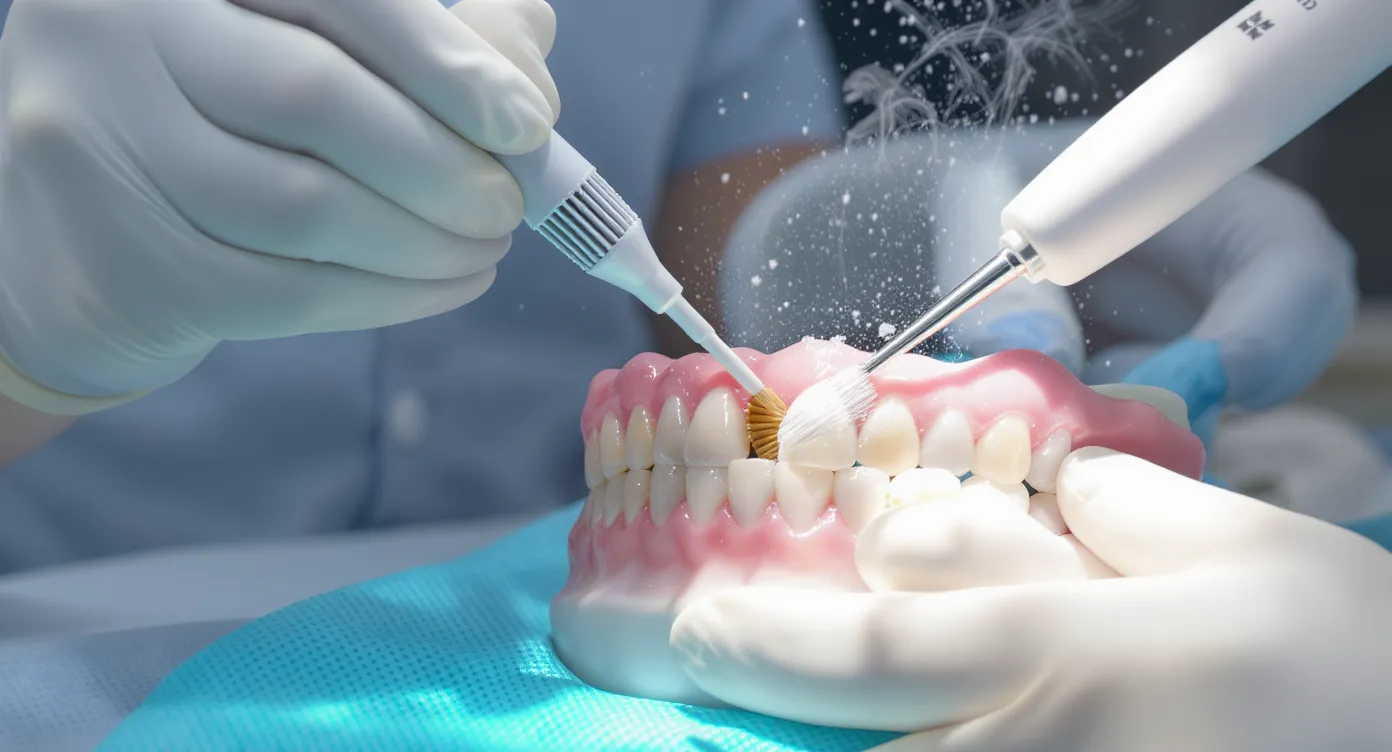
- Professional Cleaning: Avoid ultrasonic scalers on zirconia implants; use non-metallic curettes and glycine powder jets. Titanium implants tolerate standard piezo tips if coronally spaced.
- Night Guard Usage: Every All-on-4 patient who shows signs of grinding gets a lab-made hard acrylic guard. This is non-negotiable for zirconia frameworks, which are strong but brittle.
9. Questions to Ask Your Implant Surgeon
Before you sign the treatment consent, clarify:
- Which implant brand and alloy will you place, and why was it chosen over others?
- Will the final bridge be milled titanium, Cr-Co, or zirconia? Can I see chairside samples?
- Is there a digital backup file of my prosthesis for future re-milling if damage occurs?
- How many All-on-4 arches have you restored in the past year, and what is your documented success rate?
- What service warranties cover implant failure, framework fracture, or veneer chipping?
10. Takeaway: The “Best” Implant Is the One Aligned With Your Biology and Lifestyle
All-on-4 is not a one-size-fits-all solution sealed with a generic titanium screw. The interplay between alloy composition, surface chemistry, and brand-specific prosthetic options dictates whether your investment will thrive or fall short. A thoughtful material and brand selection, guided by a restorative dentist and oral surgeon who can articulate why a particular system suits your anatomy, is the real key to receiving the best All-on-4 dental implants.
For further reading, consult peer-reviewed clinical studies available in Clinical Oral Implants Research and check each manufacturer’s IFU (Instructions for Use) on their official websites. Armed with this knowledge, you can walk into your implant consultation ready to have a nuanced conversation—one that looks beyond the marketing label and focuses squarely on science, strength, and the smile you plan to wear for decades.